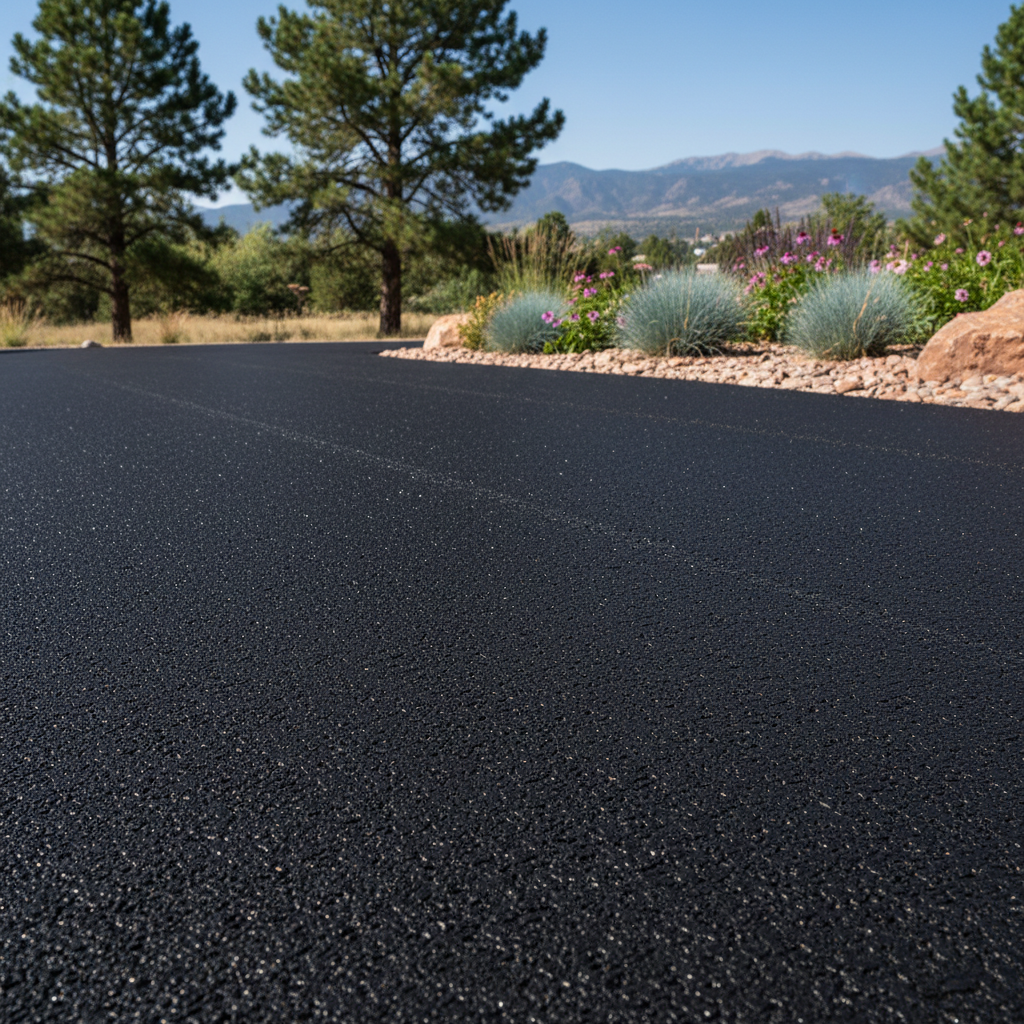
Let us talk about driveways. We have been in this business a long time, and we have seen a lot of pavement come and go. This is especially true here in Colorado Springs. Homeowners often have the same questions about their driveways. A lot of the information out there is just fluff. We will give you the real answers to the things you are probably wondering about your Driveway Paving project.
What is the best time of year to pave a driveway in Colorado Springs?
You can technically lay asphalt year-round here in Colorado Springs. This is because of our generally mild winters. For the best results, you are really looking at late spring through early fall. This is typically April to mid-October. Asphalt needs consistent, warm temperatures to cure properly. If it is too cold, the asphalt cools too fast before it is fully compacted. That can mess with its long-term durability. In addition, moisture, such as rain or standing water during installation, can reduce the quality of the finished surface. We have wild temperature swings and freeze-thaw cycles here in the Springs. Picking the right window makes a big difference for how long your Driveway Paving will last in Colorado Springs.
Asphalt or concrete: Which is better for my Colorado Springs home?
This is probably the most common question we get. Honestly, there is no single 'best' answer. It really depends on what you are looking for. Asphalt is usually cheaper upfront to install. It is also more flexible. This is a big plus with our crazy freeze-thaw cycles here in Colorado Springs. That flexibility means it can expand and contract without cracking as easily as concrete. In addition, asphalt's dark color helps melt snow faster. This is a nice bonus in the winter for your Colorado Springs home.
Now, concrete is more durable. It can last a lot longer. Sometimes it lasts up to 50 years with good care, compared to asphalt's 15-30 years. Concrete also offers more design options if you are into stamped or colored finishes. But concrete is more expensive to install. If it cracks, repairs are tougher as well as pricier. Concrete is also more prone to cracking from our freeze-thaw cycles if it is not installed right. This includes proper expansion joints as well as air-entrainment. So, it is a trade-off. Asphalt offers lower upfront cost as well as flexibility. Concrete offers a longer lifespan as well as aesthetic options. However, concrete has a higher initial cost and is less forgiving in our Colorado Springs climate.
How long do I need to wait before driving on my new asphalt driveway?
Patience is key here. You might see it looking solid after a day, but it is not fully cured. For Residential Asphalt driveways, we always tell folks to wait at least 48 to 72 hours before driving on it. If it is really hot out, you might even want to give it a few extra days. The longer you wait, the better. The asphalt needs time to cool and harden properly to support vehicle weight without rutting or damage. Do not even think about parking heavy vehicles like RVs or big trucks on it for at least a week. We recommend 14 days if you can swing it. Full curing takes months, sometimes up to a year, as the oils and binders stabilize. So, treat your new Asphalt Driveway gently in those first few weeks.
Do I need a permit for a new driveway or a driveway extension in Colorado Springs?
For a brand-new driveway that is just supported directly on grade, you usually do not need a permit from the Pikes Peak Regional Building Department. That is good news for most standard installations. However, if you are planning to widen your driveway, you will need permits. If you add a second entrance, you will need permits. If you mess with curb cuts, sidewalks, curbs, or gutters, then you will definitely need permits and plans from Colorado Springs Public Works. If your driveway connects to a busy road, a Traffic Control Permit might be necessary during the work. It is always best to check with the city or county planning department before you start. This is especially true if you are doing anything beyond a simple replacement in the same footprint. El Paso County often requires permits for new Driveway Installations, for example.
How often should I sealcoat my asphalt driveway in Colorado Springs?
Our Colorado Springs climate is tough on asphalt. The intense UV exposure at our altitude is hard on asphalt. The freeze-thaw cycles are hard on asphalt. The seasonal temperature swings are hard on asphalt. Your driveway takes a beating. That is why Sealcoating is so important. For most Residential Asphalt driveways, we recommend Sealcoating every 2 to 4 years. Some folks say every 3 years. It really depends on sun exposure, as well as traffic, as well as drainage, as well as the overall condition of your asphalt. For a brand-new Asphalt Driveway, you need to wait a bit. The fresh asphalt has oils that need to release. So, wait about 6 to 12 months before that first Sealcoat. Sealcoating too early can trap those oils and make the coating flake or peel. Regular Sealcoating protects against UV damage. It also protects against water penetration. In addition, it protects against oxidation. This helps prevent cracks and keeps your Driveway Paving looking good as well as lasting longer in Colorado Springs.
What about drainage? How do I keep water from ruining my driveway?
Drainage is important. This is especially true here in Colorado Springs with our intense storms and rapid snowmelt. You do not want water sitting on your driveway. You also do not want water running towards your house's foundation. Proper grading is important. We make sure the driveway is sloped correctly. This makes sure water flows away from your home as well as off the pavement. Sometimes, that means installing catch basins or channel drains for surface water. Sometimes it means installing French drains for subsurface issues. If you have a negative slope towards your foundation, that is a big problem that needs fixing. This can sometimes be fixed with regrading. It can also sometimes be fixed with culverts to channel water under the driveway. Good drainage protects your driveway from water damage. It also protects against erosion. In addition, it protects against those pesky freeze-thaw cracks. It is an important part of any good Paving job in Colorado Springs.
How does snow removal affect my driveway?
Our winters here in Colorado Springs can be tough. Proper snow removal is a must. But you have to be careful. Using a metal snow shovel or a plow with a metal blade set too low can scrape and damage your asphalt or concrete surface. We always recommend using a plastic shovel or a snowblower with a rubber blade to protect the pavement. Also, be mindful of de-icing chemicals. While they help, some harsh ones can deteriorate asphalt over time. If you have a gravel driveway, plowing can be done. However, it often costs more because the contractor needs to use special shoes on the plow. They also need to keep the blade slightly raised to avoid pulling up too much gravel. Remember, it is illegal to push snow from your driveway into public roadways or the right-of-way. That creates hazards as well as drainage problems for everyone else in Colorado Springs.
There you have it. This is the real talk on Driveway Paving questions. If you have more specific concerns about your property, especially with our unique Colorado Springs conditions, do not hesitate to reach out to Primetime Paving Co. We are always happy to give you an honest assessment.