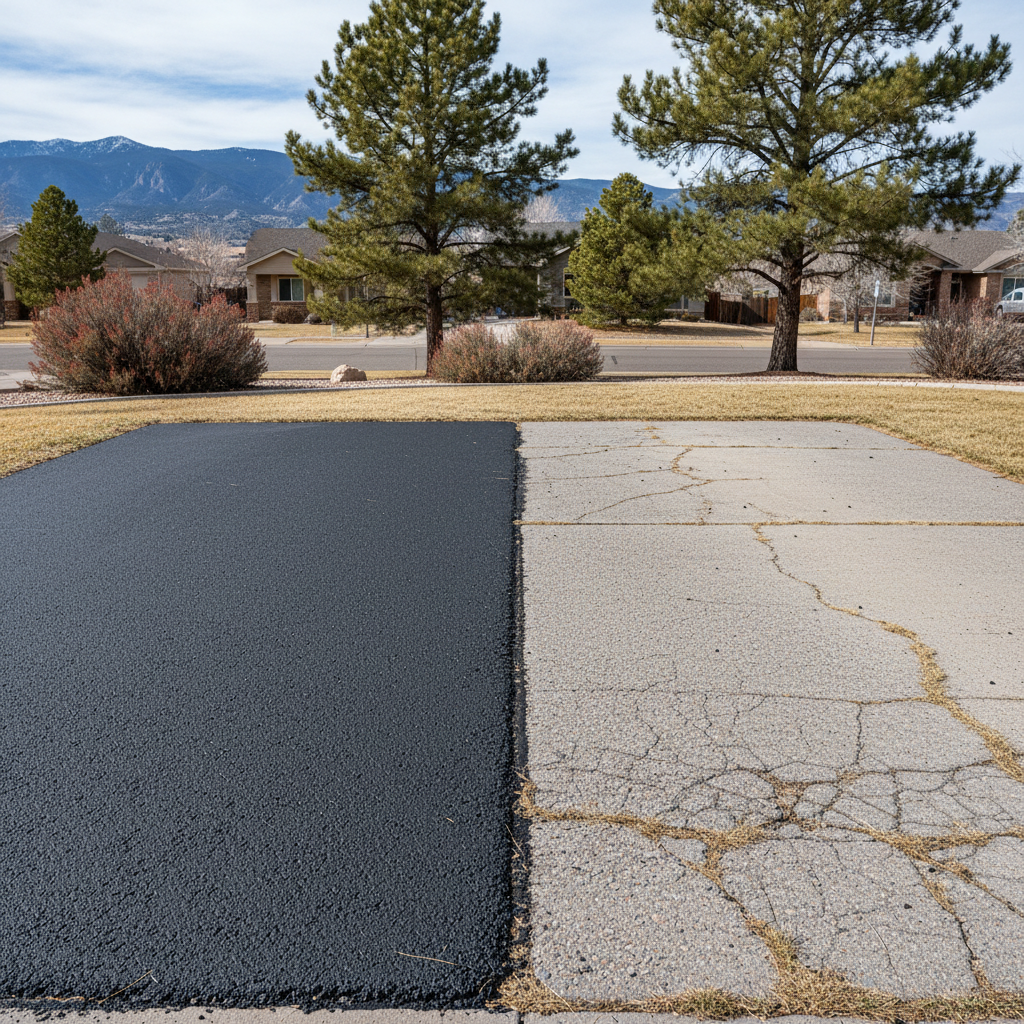
Your driveway's seen better days, right? Maybe you've got some spiderweb cracks, a pothole or two, or just a general worn-out look. When you're staring down those issues, you've essentially got two main routes for asphalt repair as a homeowner here in Colorado Springs: patching or an asphalt overlay. I get asked about this all the time, so let's talk about what each one means for your property.
Asphalt Patching: The Quick Fix
Patching is exactly what it sounds like. We're talking about fixing specific, isolated areas of damage. This could be a pothole, a really bad alligator crack section, or a sunken spot. We cut out the bad asphalt, prepare the base underneath if needed, and then fill it with new hot asphalt, compacting it down. It's like putting a band-aid on a wound – it stops the bleeding in that one spot.
The Good & The Bad of Patching
- Cost: This is usually the cheapest option upfront. You're only paying for material and labor for the specific damaged areas.
- Speed: Patches can be done pretty quickly, often in a day depending on the extent of the damage.
- Durability: A good patch, done right, will hold up well in that specific spot. But here's the kicker: it doesn't address the underlying issues of the rest of your driveway. If the whole thing is failing, new cracks will just pop up next to your perfect patch.
- Appearance: Let's be honest, patches rarely blend perfectly. You'll see the seams, and the color might be a bit off from your older asphalt. It's functional, not necessarily pretty.
- Maintenance: You might find yourself patching other areas down the road as more damage appears. It's a bit of a whack-a-mole game sometimes.
Asphalt Overlay: A New Skin for Your Driveway
An asphalt overlay is a more comprehensive approach. Instead of just fixing individual spots, we clean and prepare the entire existing asphalt surface, make any necessary repairs (like filling larger cracks or leveling out low spots), and then lay a new layer of asphalt – usually 1.5 to 2 inches thick – right on top of your old driveway. Think of it as giving your driveway a brand new skin.
The Good & The Bad of Overlaying
- Cost: More expensive than patching, no doubt. You're covering the entire surface, so there's more material and labor involved.
- Speed: Still relatively quick compared to a full tear-out and replacement, but it takes longer than just patching.
- Durability: This is where overlays shine. They significantly extend the life of your driveway by providing a fresh, strong wearing surface. It covers all those small cracks and imperfections, preventing new ones from forming for a good while.
- Appearance: An overlay makes your driveway look brand new. It's smooth, uniform, and boosts your home's curb appeal big time.
- Maintenance: With a fresh surface, your maintenance needs drop considerably. You'll still want to sealcoat every few years, but major repairs should be minimal for quite a while.
What I Recommend for Colorado Springs Homeowners
Here in Colorado Springs, we deal with some pretty harsh conditions. We've got those intense freeze-thaw cycles, especially in neighborhoods like Black Forest where the soil can hold moisture, and the sun bakes everything in the summer. These conditions are brutal on asphalt, causing it to expand, contract, and crack.
If you've got just one or two isolated potholes or cracks that are relatively new, and the rest of your driveway is in decent shape, then patching might be a good temporary solution to get a few more years out of it. It's a budget-friendly way to prevent further immediate damage.
However, if your driveway is showing widespread cracking (like alligator cracking), multiple potholes, significant fading, or just looks generally tired and worn out, I'm going to lean towards recommending an asphalt overlay. Why? Because patching a driveway that's failing everywhere else is just throwing good money after bad. You'll fix one spot, and another will pop up. An overlay addresses the entire surface, giving you a strong, uniform, and attractive driveway that can stand up to our Colorado weather for years to come. It's a better long-term investment for your property.
It's also important to consider the underlying base. If your base is completely shot – like if you have major sinking or widespread structural failure – then neither patching nor an overlay will be a permanent fix. In those cases, you might be looking at a full tear-out and replacement, but that's a conversation for another day. For most homes with a decent base but a worn surface, an overlay is the sweet spot.
Ultimately, it comes down to the extent of the damage and your budget. But for lasting results and a driveway that looks great and performs well against our unique weather, an overlay often makes the most sense. Give Primetime Paving Co a call, and we can take a look at your driveway and give you an honest assessment of what's best for your situation.