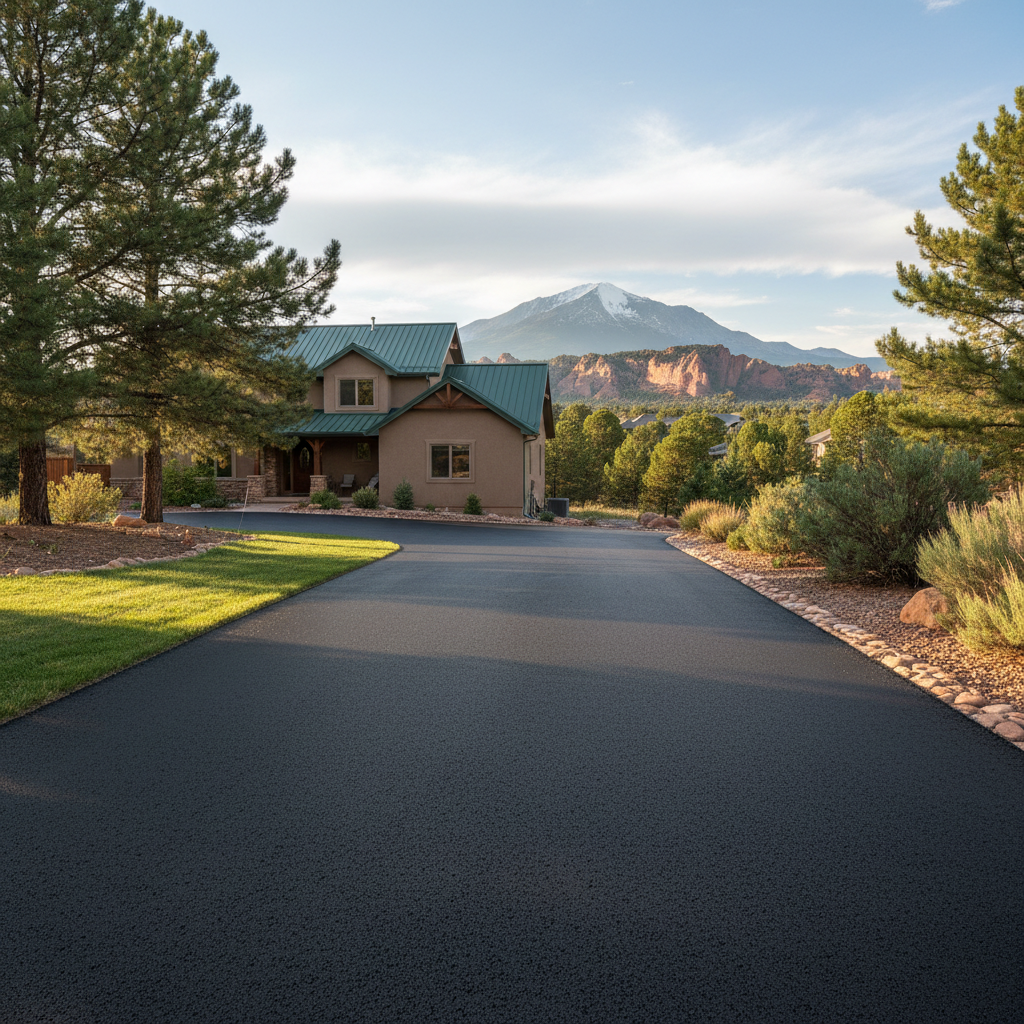
You just dropped good money on a new asphalt driveway, or maybe you've had one for years and want to keep it in top shape. Either way, you're smart to think about maintenance. Here in Colorado Springs, our weather can be brutal on asphalt. We get those scorching summer days, then freezing winter nights with snow, ice, and that constant freeze-thaw cycle. That stuff really takes a toll.
I've seen countless driveways around neighborhoods like Broadmoor Bluffs or Rockrimmon that just weren't cared for, and they end up needing expensive repairs way sooner than they should. A little bit of effort now saves you a whole lot of headache and cash down the road.
Extending Your Driveway's Lifespan
The biggest thing you can do to extend the life of your asphalt is sealcoating. Think of it like sunscreen and a protective barrier for your driveway. Sealcoat protects against UV rays, which dry out the asphalt binder and make it brittle. It also seals the surface, preventing water from seeping into the base layers. If water gets in and then freezes, it expands, causing cracks and potholes. We call that freeze-thaw damage, and it's a huge problem here in Colorado.
You should plan to sealcoat your driveway every 2-3 years, depending on traffic and how much sun it gets. If your driveway is brand new, wait about 6-12 months for the asphalt to fully cure before the first sealcoat. Don't go too long between applications, or you'll lose the protective benefits.
Another key factor is drainage. Make sure water isn't pooling on your driveway. If you've got low spots where water collects after a rain or snowmelt, that's a recipe for disaster. Those areas will degrade faster. Sometimes, a simple patch can fix a low spot, but if it's a widespread issue, you might need a more significant repair.
Regular Maintenance You Can Do
Beyond sealcoating, there are a few simple things you can do yourself to keep your driveway healthy:
- Keep it clean: Sweep off dirt, leaves, and debris regularly. Organic matter can hold moisture against the asphalt, and dirt can wear down the surface over time.
- Watch for oil and gas spills: These petroleum products dissolve the asphalt binder. Clean them up immediately with an absorbent material like cat litter, then scrub with a stiff brush and mild detergent. Rinse thoroughly.
- Trim back roots: Tree roots can grow under your driveway and cause cracks or buckles. Keep an eye on nearby trees and address any root issues before they damage the pavement.
- Avoid heavy loads: Try not to park heavy RVs, trailers, or commercial vehicles on your residential driveway for extended periods. Asphalt is flexible, but it has its limits.
Warning Signs of Trouble
You don't need to be an expert to spot problems. Just keep an eye out for these common issues:
- Cracks: Small, hairline cracks are normal, especially as asphalt ages. But if they start to widen, connect, or form a spiderweb pattern (alligator cracking), that's a sign of underlying issues. Water is getting in, and your base might be failing.
- Potholes: These are usually the result of cracks that weren't addressed. Water gets in, freezes, expands, and then traffic breaks away the weakened asphalt. Potholes only get bigger if you ignore them.
- Fading and dullness: If your asphalt looks gray instead of black, it means the binder is oxidizing from sun exposure. This makes it brittle and more susceptible to cracking. It's a clear sign you're overdue for sealcoating.
- Raveling: This is when the aggregate (the small stones in the asphalt) starts to come loose from the surface. It means the binder is failing, and the driveway is deteriorating.
- Standing water: As I mentioned, any areas where water consistently pools are a big red flag.
When to Call a Professional
Look, some things you can handle yourself, but for others, you really need someone who knows what they're doing. You should definitely call Primetime Paving Co. if you see:
- Significant cracking: Especially alligator cracking or cracks wider than about a quarter-inch. We can clean and fill these properly to prevent further damage.
- Potholes: While you can buy cold patch at the hardware store, it's usually a temporary fix. We can do a hot patch or cut out and replace the damaged section for a much more durable repair.
- Drainage issues: If you've got consistent standing water, that's a structural problem that needs a professional assessment.
- Large areas of raveling or crumbling asphalt: This indicates the asphalt is failing and likely needs patching, an overlay, or even full replacement in that section.
- You're ready for sealcoating: It's a messy job, and getting the right product and application takes experience. We've got the equipment and know-how to do it right, ensuring maximum protection and a great look.
Don't wait until your driveway is a total mess. Addressing these issues early on is always cheaper and less disruptive than letting them get out of hand. A little proactive care goes a long way in keeping your Colorado Springs driveway looking good and functioning well for years.