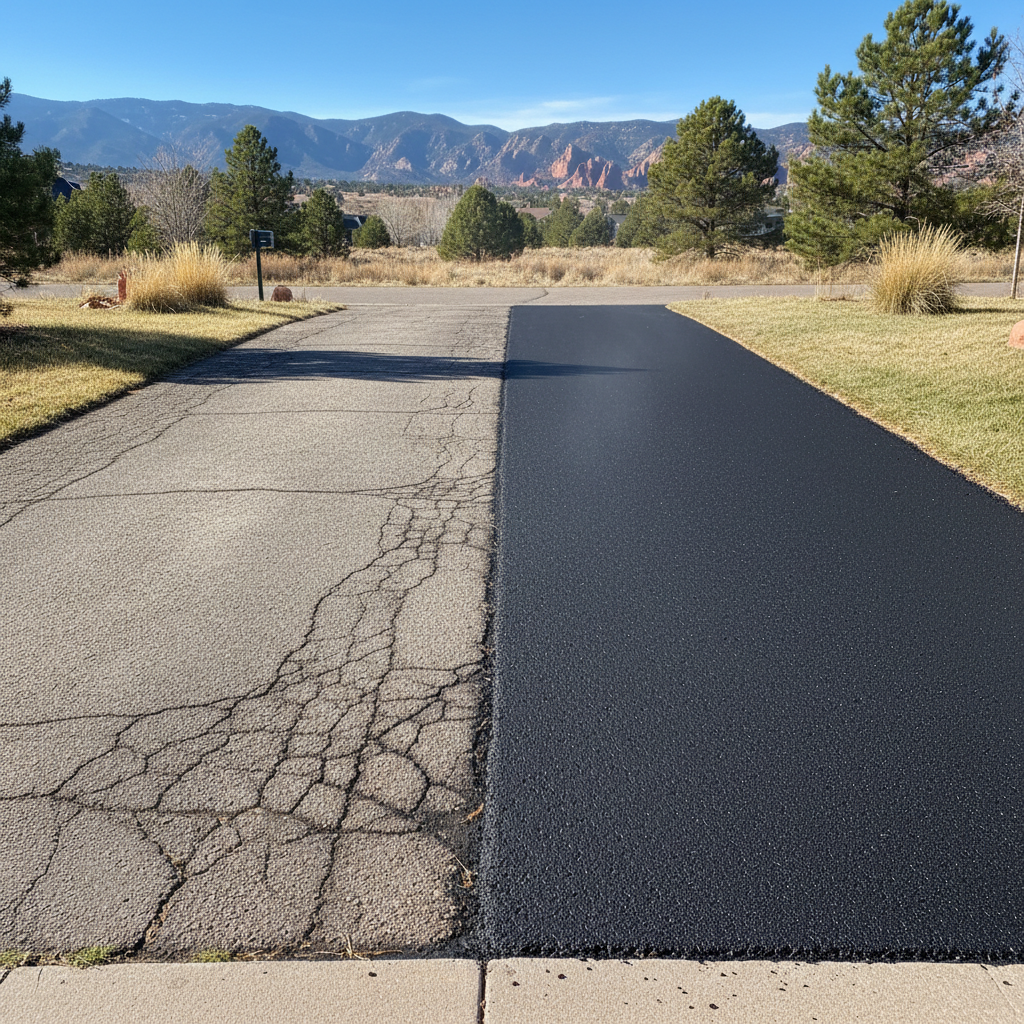
Alright, let's talk about your parking lot. If you're a business owner in Colorado Springs, you know a good parking lot isn't just about looks; it's about safety, accessibility, and making a good first impression. When your asphalt starts showing its age, you've generally got two main options: an asphalt overlay or a full depth replacement. I see folks wrestle with this choice all the time, so let's clear up what each one really means for your property and your wallet.
Asphalt Overlay: The Quick Fix?
An asphalt overlay is basically putting a new layer of asphalt right over your existing, damaged pavement. Think of it like a fresh coat of paint, but for your parking lot. We'll clean the surface, make any necessary repairs to the existing asphalt (like filling potholes or fixing severe cracks), and then pave a new layer, usually 1.5 to 2 inches thick, right on top. It's a popular option for a few good reasons.
The Good Stuff About Overlays:
- Cost: This is usually the big one. An overlay is almost always less expensive upfront than a full replacement. You're using less material and we're not tearing out the old stuff, so labor and disposal costs are lower.
- Speed: We can get an overlay done a lot faster. Less disruption to your business, which means your customers can get back to parking and shopping quicker. For a busy retail center, that's a huge plus.
- Appearance: You get that brand-new, smooth, black surface. It looks great, improves curb appeal, and makes your property feel well-maintained.
The Catch With Overlays:
- Condition of the Existing Base: This is critical. An overlay only works if the underlying asphalt and its base are still structurally sound. If you've got major issues like widespread alligator cracking, significant heaving, or drainage problems that have damaged the sub-base, an overlay is just putting a band-aid on a bullet wound. Those underlying problems will eventually telegraph through the new layer.
- Lifespan: While it extends the life of your pavement, it's not as long-lasting as a full replacement. You might get another 7-10 years out of it, maybe more with good maintenance, but it's not a 20-year solution.
- Drainage: Adding a new layer raises the overall height of your parking lot. We have to be really careful to make sure we don't mess up your existing drainage patterns, especially around storm drains or building entrances. Sometimes, we have to mill around those areas to maintain proper water flow.
Full Depth Replacement: The Long-Term Solution
A full depth replacement means we're tearing out all the old asphalt, sometimes even digging down to address the sub-base if needed, and then building a brand-new pavement structure from the ground up. This is the most comprehensive approach.
The Good Stuff About Replacements:
- Durability and Lifespan: This is where a full replacement shines. You're getting a completely new, engineered pavement system. With proper installation and maintenance, you can expect 15-20 years, or even more, out of it. It's built to last.
- Addresses Underlying Issues: If you've got serious structural problems, poor drainage, or a failing sub-base, a full replacement lets us fix all of that. We can re-grade, stabilize the soil, and ensure you have a solid foundation. This is especially important in Colorado Springs, where our freeze-thaw cycles and expansive soils (like the clay you find in areas like Briargate) can really wreak havoc on a weak base.
- Better Drainage: Starting fresh allows us to design and implement optimal drainage solutions, preventing water from pooling and causing future damage.
The Catch With Replacements:
- Cost: No surprise here, it's significantly more expensive upfront. You're paying for demolition, hauling away debris, more material, and more labor.
- Time and Disruption: It takes longer, plain and simple. Your parking lot will be out of commission for a longer period, which can be a real headache for your business operations.
- Environmental Impact: More material usage and disposal, though a lot of old asphalt can be recycled, which is something we always aim for at Primetime Paving Co.
So, Which One Should You Choose?
Here's how I usually break it down for folks:
- Go with an Overlay if: Your existing pavement has minor surface cracks, fading, or shallow potholes, but the underlying structure feels solid. You're looking for a cost-effective way to refresh the look and get several more years out of your lot without major disruption. Your budget is tighter right now.
- Go with a Full Depth Replacement if: You've got widespread, deep cracks, potholes that keep coming back, significant heaving, or areas where the pavement has completely failed. You've noticed drainage issues. You want the longest-lasting solution possible and are prepared for the higher upfront cost and longer project timeline. You're planning to own the property for a long time and want to avoid future headaches.
Honestly, the best way to figure it out is to have an expert take a look. We'll come out, inspect your parking lot, and give you an honest assessment of its condition. We'll tell you if an overlay is a smart move or if you'd just be throwing money away because the problems run deeper. We've seen it all across Colorado Springs, from the older commercial strips downtown to the newer developments up north. Getting it right the first time saves you a ton of money and stress down the road.